Best Wealth and Asset Management Courses

Wealth and asset management is an industry with a number of straightforward career paths to take ambitious students to six-figure salaries.
That said, it can be a hard field to break into without the right mix of technical knowledge, client-facing skills, and professional credibility.
However, using one of the best wealth and asset management courses can help you build that foundation, especially if you’re trying to move into financial planning, portfolio management, private wealth, or investment advisory work.
We reviewed the top wealth and asset management courses based on curriculum, career relevance, flexibility, pricing, support, and overall value. Here’s where each course stands out, where it falls short, and who it’s best for.
Best Wealth & Asset Management Courses
- Corporate Finance Institute (CFI)
- New York Institute of Finance
- Asset Management Academy
- Asset Wisdom
- Jacobs Wealth Advisor School
| AIS RANKING | #1 | #2 | #3 | #4 | #5 |
|---|---|---|---|---|---|
| COMPANY |  |  |  |  |  |
| ONLINE ONLY? | Yes | No | Yes | Yes | No |
| MOBILE SUPPORT? | Yes | Yes | Yes | Yes | No |
| BUNDLES? | No | No | Yes | No | No |
| LIVE OPTIONS? | No | Yes | Yes | No | Yes |
| GET STARTED | Start Now | Start Now | Start Now | Start Now | Start Now |
1. Corporate Finance Institute Courses

The Corporate Finance Institute (CFI) is renowned for offering in-depth financial education and training to professionals around the globe. With a focus on practical skills and real-world application, CFI’s courses are designed to bridge the gap between academic theory and the demands of the finance industry.
One Reddit user, currently enrolled in CFI’s FMVA program, shares their experience: “It’s very similar to what I learned with my finance degree.” They highlight the program’s effectiveness in enhancing their practical skills, especially noting, “I learned more about Excel through CFI than in college,” and appreciating the industry insights, “as well as some nice industry standards with formatting.”
Course Details
The Corporate Finance Institute (CFI) offers a suite of five certification programs, each tailored to a specific area of finance and analytics. These programs are designed to equip professionals with the skills needed to excel in various sectors of the financial industry. Here’s a brief comparison of each:
- FMVA® – Financial Modeling & Valuation Analyst: This certification is geared towards those who want to excel in financial modeling and valuation. It’s ideal for professionals involved in equity research, investment banking, corporate development, and other areas where financial analysis is crucial.
- CBCA® – Commercial Banking & Credit Analyst: The CBCA® certification focuses on the skills required for commercial banking and credit analysis. It’s suitable for individuals looking to specialize in credit assessment, loan management, and financial risk analysis within the banking sector.
- CMSA® – Capital Markets & Securities Analyst: This program is tailored for those interested in capital markets and securities. It’s perfect for professionals aiming for roles in trading, portfolio management, and financial market analysis.
- BIDA® – Business Intelligence & Data Analyst: The BIDA® certification is designed for those who want to bridge the gap between finance and technology. It’s ideal for professionals who are keen on data analysis, financial forecasting, and business intelligence.
- FPWM™ – Financial Planning & Wealth Management: This certification is targeted at individuals who are focused on financial planning and wealth management. It’s well-suited for financial advisors, wealth managers, and planners who provide clients with long-term financial strategy services.

Each of these certifications provides a comprehensive curriculum that includes practical skills and tools relevant to their respective fields. They are all self-paced, allowing professionals to balance their learning with their work commitments.
The certifications come with a range of resources, including video lectures, downloadable templates, and access to a network of finance professionals. Whether you’re looking to deepen your expertise in a current role or pivot to a new area within finance, CFI’s certifications offer a pathway to enhance your credentials and advance your career.
Corporate Finance Institute Features:
- 19 Courses: CFI’s wealth management library includes 19 courses covering financial planning, portfolio management, asset classes, client communication, insurance, private banking, and related topics.
- 700+ Lessons: The curriculum includes 700+ lessons, giving learners a broad foundation across wealth management and financial planning topics.
- 60+ Interactive Exercises: CFI includes more than 60 interactive exercises, which helps the training feel more practical than a video-only course library.
- Guided Simulations: The platform uses guided simulations to reinforce “learn by doing” practice, especially for applied finance and client-focused concepts.
- Expert Instructors: CFI courses are taught by finance professionals, which gives the lessons a more practical, career-focused feel.
- 500,000+ 5-Star Ratings: CFI highlights more than 500,000 5-star ratings across its training, which supports its strong reputation with online finance learners.
Corporate Finance Institute Pros and Cons
-
Designed for All Levels: The program is structured to cater to learners regardless of their prior knowledge in finance or accounting, ensuring ease of understanding and mastery of concepts for beginners and experts alike. -
Accessible and Engaging Video Tutorials: The FMVA program’s video tutorials are frequently praised for their clarity and brevity, making complex concepts accessible to all learners, regardless of their background. -
Continual Content Refresh: The addition of new courses each month ensures that learners have access to the latest information and trends in the industry. -
Career Readiness and Advancement: The FMVA program is tailored to meet the real-world requirements of the financial job market, particularly within the private sector. It prepares students for career advancement by teaching the practical skills and tools that employers value.
-
Limited Credential Weight: CFI is strong for practical finance training, but it may not carry the same resume weight as a formal designation. -
Self-Paced Accountability: The format is flexible, but learners who need live deadlines or instructor pressure may struggle to stay consistent. -
Less Personalized Support: The large online training model is efficient, but it may not offer the same one-on-one guidance as a smaller coaching-style program.

2. New York Institute of Finance Courses

The New York Institute of Finance (NYIF) offers a versatile and comprehensive wealth management course designed to suit a variety of learning preferences. With a legacy rooted in the New York Stock Exchange since 1922, NYIF has established itself as a beacon for finance professionals worldwide. The course aims to equip students with the knowledge and skills necessary to excel in the field of wealth management.
Course Details
- Online Professional Certificate: NYIF offers this as an online professional certificate in wealth management, designed for new wealth management professionals, product specialists, wealthy individuals, and non-client-facing staff.
- 11 Wealth Management Modules: The curriculum includes 11 modules covering wealth management, estate planning, trusts, financial planning, hedge funds, mutual funds, commodity and energy markets, portfolio management, money and banking, and anti-money laundering.
- 75 Hours Of Course Content: NYIF lists the full certificate at 75 hours, with individual modules ranging from 3 to 10 hours.
- Portfolio And Client-Focused Topics: The course covers client profiling, asset management techniques, estate and tax planning, portfolio management, risk, and alternative investment products.
- Expert Finance Training Provider: NYIF has been providing finance training for more than 100 years and offers professional certificates, online courses, classroom training, and virtual learning across its broader course catalog.
- Faculty Support Forums: For NYIF online learning generally, students can learn on their own schedule while contacting faculty through support forums.
New York Institute Pros and Cons
-
Adaptability to Learning Styles: The variety of course formats is a testament to NYIF’s commitment to educational accessibility, recognizing that one size does not fit all in professional development. -
Depth of Expertise: The instructors bring a treasure trove of industry experience, translating complex financial concepts into actionable knowledge that can be immediately applied in the workplace. -
Interactive Learning Experience: The interactive elements of the course, including Q&A sessions, are designed to mimic the dynamism of the financial sector, preparing students for the kinds of engagements they will encounter professionally. -
Credentialing and Continuing Education: The credentials offered by NYIF are not just educational achievements; they serve as a beacon for professional stature and are recognized across the financial industry.
-
Access Duration: The one-year access period may require efficient time management from students to ensure they can complete and review the course within the allotted timeframe. -
Inconsistent Course Materials: Some of the NYIF courses may not include video content, which has led to disappointment among students who expected a uniform multimedia experience. -
Time-Intensive Format: With 11 modules and 75 hours of video content, NYIF may be more involved than learners who want a quick wealth management overview.
3. Asset Management Academy IAM Certification Courses

The Asset Management Academy’s Institute of Asset Management (IAM) Certificate course stands as their flagship offering, drawing widespread participation from those eager to delve into the world of asset management. Esteemed for its comprehensive coverage of asset management theory, the course is meticulously crafted to ensure that participants emerge fully equipped to embark on a successful asset management career, armed with the coveted IAM Certificate qualification.
Echoing its popularity and effectiveness, the academy boasts a TrustScore of 4.6 out of 5 stars on Trustpilot, with an impressive 80% of reviews at 5 stars. A notable testimonial from a satisfied learner, Jane M, highlights the course‘s well-structured and expertly delivered content, recommending prompt examination following the course to capitalize on the fresh, in-depth knowledge and the utility of the practice questions provided.
Course Details
This wealth management training program includes a number of study materials to help you prepare for your IAM Certificate exam.
Asset Management Academy Features:
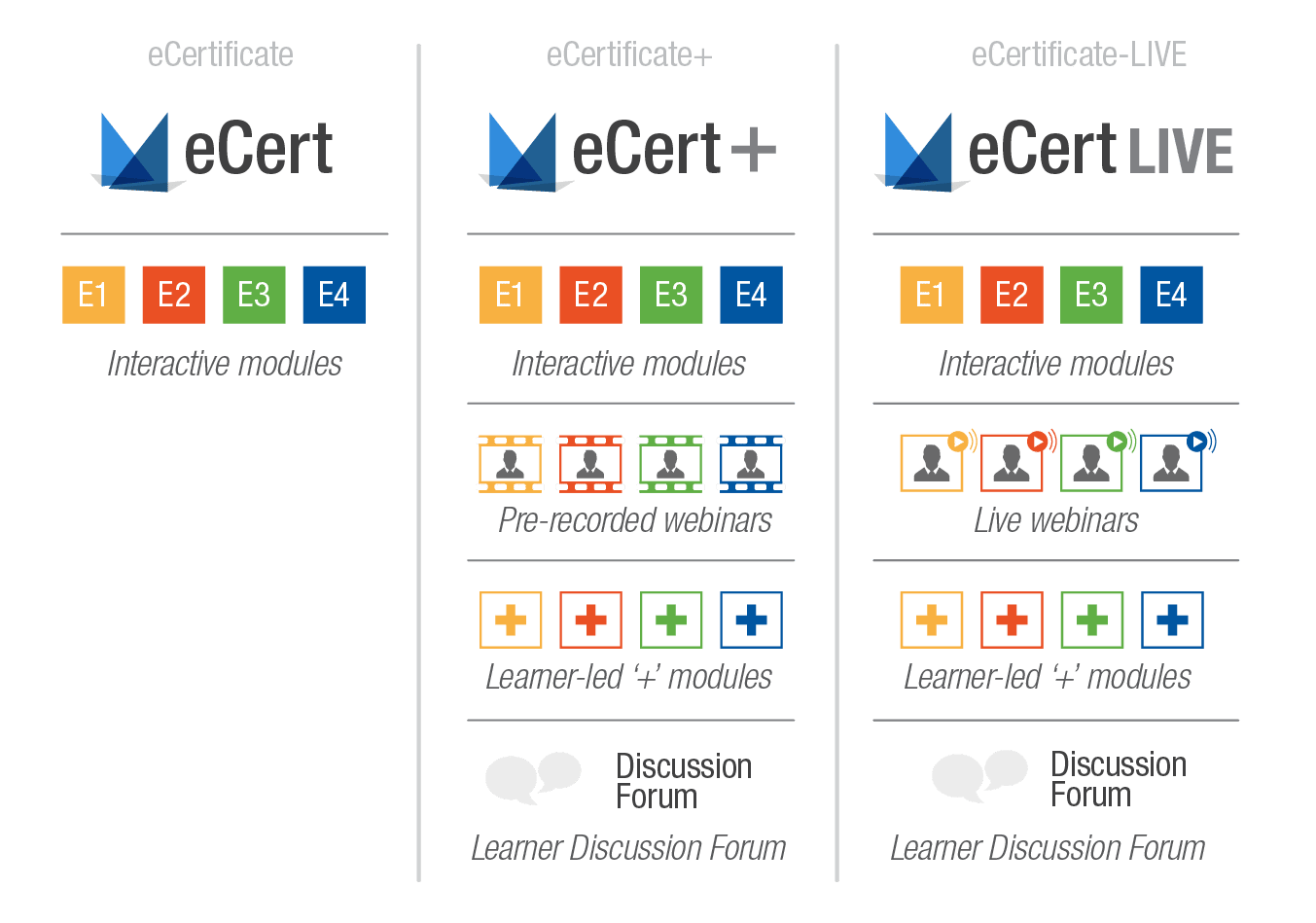
- IAM Certificate Alignment: Asset Management Academy’s eCert+ course covers the full IAM Certificate syllabus across 22 sessions and 4 core eLearning modules.
- Recorded Webinar Support: The eCert+ version adds pre-recorded webinars with an expert trainer after each module, plus offline learning activities to reinforce the material.
- 12 Months Of Access: Students get 12 months of online access, making it easier to study around work without needing to travel or attend live classes.
- 40 CPD Hours: The eCert+ course is certified for 40 hours of CPD, giving learners formal professional development credit after completing the training.

Asset Management Academy Pros and Cons
-
Options: From individual learning to corporate group learning, this wealth management education company has you completely covered. -
Pricing: Asset Management Academy allows you to take advantage of all that their courses have to offer for just over $500. -
Expert-Led Webinars: The pre-recorded webinars are led by experts, ensuring high-quality, actionable insights. -
Solid Reviews: The company and its courses seem to have consistently positive reviews, making it a reliable investment.
-
Live Webinars for Corporate Only: While you can still view recorded webinars, the live webinar option is reserved only for corporate groups. -
Lack of Audio Accompaniment: One immediate observation from students beginning the course is the absence of audio on some slides. -
Need for Conciseness and More Video Content: Some learners have noted that the course can be somewhat verbose and would benefit from a more succinct presentation style.
Bottom Line: The Asset Management Academy’s IAM Certificate course offers a solid foundation in asset management principles at a competitive price, making it accessible to a wide audience. However, the course’s lack of audio in some modules and the desire for more concise, video-rich content suggest there is room for improvement in delivering a more engaging and modern educational experience.
4. Asset Wisdom Wealth Management Courses

Asset Wisdom is a more focused option for learners preparing for the IAM Certificate in Asset Management. Instead of trying to cover every corner of wealth management, the course is built around asset management fundamentals, CPD credit, and exam preparation.
The program includes 14 eLearning modules, about 25 hours of learning, interactive exercises, animated videos, and access across desktop and mobile devices. I like that format for working professionals because it breaks the material into smaller sections instead of forcing you through long classroom-style sessions.
Asset Wisdom also includes 25 CPD credits and preparation for the IAM Certificate exam. The course covers the 39 GFMAM Asset Management Landscape subject areas, which gives it a clear structure for learners who want asset management training that connects directly to a recognized exam framework.
It is not the broadest finance or wealth management program on this list, and it may be too specialized if you’re looking for general portfolio management or private wealth training. But if your goal is IAM Certificate prep with flexible online study, Asset Wisdom is a practical, focused choice.

Course Details
The Asset Management Academy offers a dynamic and interactive online learning experience, designed to be as flexible as it is informative. Here’s what you can expect:
- 14 eLearning Modules: Asset Wisdom’s AM Certificate Course is built around 14 online modules that cover the core principles of asset management.
- 25 Hours Of Learning: The course is designed to provide about 25 hours of learning and awards 25 CPD credits after successful completion.
- Interactive Exercises: The modules include interactive exercises that help make asset management concepts easier to understand and apply.
- IAM Certificate Prep: The course is designed to prepare learners for the IAM Certificate exam and covers the 39 GFMAM Asset Management Landscape subject areas.
- Webinar Support: The course includes three webinars facilitated by an asset management professional, giving learners extra context beyond the modules.
- Mobile And Desktop Access: Learners can access the modules on a laptop, tablet, PC, or smartphone, which makes the course easier to fit around work.
Asset Wisdom Pros and Cons
-
Welcoming to Beginners: The Asset Management Foundation Award course, which is designed as a solid introduction for wealth management professionals. -
Convenience: Asset Wisdom is very up front with their students, from pricing to presentation. They also offer options to purchase your IAM Certificate Exam once you’ve completed their school. -
Flexible Course Options: Asset Wisdom lets learners choose from individual modules, accredited or endorsed courses, topic-specific training, and sector-focused courses. -
CPD-Certified Training: All Asset Wisdom courses are CPD certified, which gives the training more external validation than a basic self-study course.
-
Lack of Uniform Style: While Asset Wisdom does provide plenty of content to use while learning their material, it can sometimes feel like the different styles clash. -
Limited Website Information: Asset Wisdom’s online presence could be more robust. -
Sparse Online Reviews: There is a noticeable absence of reviews for Asset Wisdom on popular platforms like Trustpilot and Reddit.
5. Jacobs Asset Management Training Courses

Jacobs’ Infrastructure Asset Management Training is a practitioner-led course for professionals who already have some asset management experience and want to apply those principles more effectively at work.
The course launched in 2015 and has been delivered to about 2,500 participants. It is structured around five modules aligned with ISO 55000, PAS 55, and the Institute of Asset Management learning framework. Topics include asset management fundamentals, asset-related risk, asset lifecycle management, asset information, and financial and business impacts.
What makes the course stand out is the practical format. Jacobs uses short presentations, applied theory, real-world examples, and hands-on exercises built around “MoneyPit Manor,” a fictional apartment building with realistic infrastructure, risk, and service delivery challenges. That gives the training a more applied feel than a purely academic asset management course.
Jacobs is also recognized by the Institute of Asset Management as an IAM Endorsed Trainer, and the course supports participants preparing for the IAM Certificate exam. The standard format includes four live online sessions, with an optional recap session for exam-focused review.
Jacobs’ Course Includes:
- IAM-Endorsed Training
- Five Learning Modules
- Four 4-Hour Live Online Sessions
- Optional 90-Minute Exam Recap
- ISO 55000 And PAS 55 Alignment
- Presentation And Applied Theory
- Real-World Examples
- Hands-On Practice Exercises
- IAM Certificate Exam Support
Jacobs Pros and Cons
-
3 Day Course: Unlike other courses, Jacobs doesn’t want to waste any time—so all of their courses take place over just 3 days. -
Modular Learning: Each of the 5 course modules tackles important information in an easy-to-understand manner. -
IAM-Endorsed Training: Jacobs is recognized as an IAM Endorsed Trainer, which gives the course stronger credibility for IAM Certificate prep. -
Practical Exercises: The course uses real-world examples and hands-on activities, making it more applied than a purely lecture-based asset management course.
-
Minimum Attendance Requirement: Jacobs Asset Management Training stipulates a minimum of 15 attendees to conduct a course, which could be a significant limitation for smaller organizations or groups that cannot meet this threshold. -
Variable Relevance to Job Roles: The Jacobs Asset Management Training course, while comprehensive, may not align perfectly with the specific needs and challenges of every participant’s current role. -
Lack of Post-Course Support: Once the course is completed, participants may not have ongoing support or resources to help apply what they’ve learned in their work environment.
FAQs
What is the best wealth management course for beginners?
The best beginner course is usually one that covers financial planning, portfolio basics, client communication, risk, and investment fundamentals without assuming years of finance experience.
Are wealth management courses worth it?
They can be worth it if they help you build practical skills, prepare for a recognized credential, or strengthen your resume for finance, advisory, or asset management roles.
What is the difference between wealth management and asset management?
Wealth management usually focuses on helping individuals manage their full financial picture. Asset management is more focused on managing investments, portfolios, or physical assets depending on the course.
Do I need a certification to work in wealth management?
Not always, but a respected certification or training program can help if you’re trying to prove your knowledge, move into a finance role, or stand out to employers.
How do I choose the right wealth or asset management course?
Start with your goal. Choose a beginner-friendly course for fundamentals, a credential-focused course for exam prep, or a more advanced program if you already work in finance and want deeper technical training.

Kenneth W. Boyd is a former Certified Public Accountant (CPA) and the author of several of the popular "For Dummies" books published by John Wiley & Sons including 'CPA Exam for Dummies' and 'Cost Accounting for Dummies'.
Ken has gained a wealth of business experience through his previous employment as a CPA, Auditor, Tax Preparer and College Professor. Today, Ken continues to use those finely tuned skills to educate students as a professional writer and teacher.