
Becker vs Gleim CMA Review: Which Works Better?
Certified management accountants earn up to 43% more than their non-certified peers, via the IMA.
But to reap the rewards of a CMA, you’ll have to get it first.
In this guide, I’ll compare Becker vs. Gleim CMA review courses, so you know which is the better fit for which kind of student.
Let’s dive into side-by-side analyses of each course’s user experience, value, video lectures, and customer service.
Key Takeaways
- If you care most about polish, planning tools, and a premium course feel, then Becker is the better fit.
- If you want stronger answer explanations, then Becker has the edge because it explains why the wrong answers are wrong, too.
- If you like a detailed day-by-day checklist, then Becker’s study planner feels more helpful than Gleim’s.
- If you want more practice questions and essay prep, then Gleim gives you more volume.
- If you stay motivated by short lessons and quick progress, then Gleim’s bite-sized setup is excellent.
Overview: Becker vs Gleim CMA
Becker CMA Review: The More Polished, Guided Option

Becker feels like the more premium course almost immediately. The platform is cleaner, the study planner is more detailed, and the digital textbook is easily the best I tested. It feels like a course built for someone who wants structure instead of having to piece together their own study schedule.
In my access, Becker had 4,000+ MCQs, 26 case-based questions, 155 videos, and about 27 hours of video content. The videos were longer than Gleim’s on average, but they fit the course style: more guided, more polished, and less “just get through this as fast as possible.”
My favorite part was the planner. I could enter my exam date, and Becker turned the course into daily tasks with time estimates. The answer explanations were also much stronger than Gleim’s because they explained the wrong answers, too. Becker didn’t give me as much raw practice as Gleim, but it gave me more structure around the practice.
Pros
✅ More polished, professional course experience
✅ Excellent study planner with clear daily tasks
✅ Stronger answer explanations
✅ Best digital textbook tools I tested
✅ Features like coaching, LiveOnline classes, and a pass guarantee
Cons
❌ Fewer MCQs and essays than Gleim
❌ Videos are longer on average
❌ Most expensive CMA review option
Gleim CMA Review: The Better Practice-Heavy Course

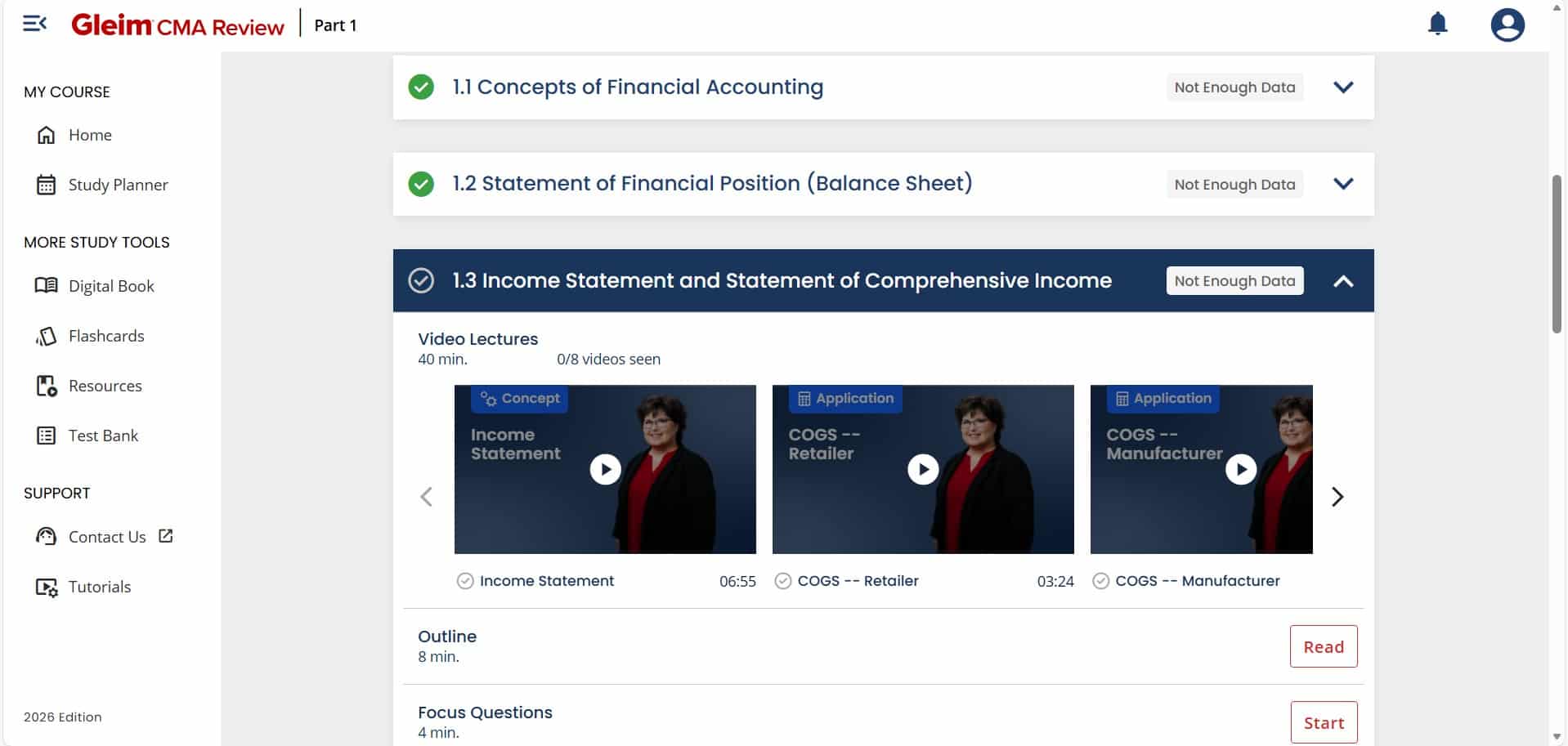
Gleim feels less glossy than Becker, but I liked studying inside it more than I expected. The layout is extremely practical: video on the left, outline in the upper-right, notes in the lower-right. It’s simple, but it works. I didn’t have to hunt for anything or keep rearranging my screen.
Gleim had more content in my access: 4,500+ MCQs, 130+ essays, around 570 videos, and 70+ video hours. The videos were shorter, averaging around 7 minutes, and that made the course feel much easier to chip away at. It gave me a lot of those quick “finished another thing” moments, which honestly helps when studying feels endless.

Amy Ford had a calm, professor-like teaching style that I liked. She wasn’t overly animated, but she was clear and good at pointing out what mattered for the exam. Gleim’s explanations were much shorter than Becker’s, but the course made up for that with volume, short lessons, focus questions, and a study flow that kept me moving.
Pros
✅ More MCQs and essay practice
✅ Shorter videos make the course easier to chip away at
✅ Great screen layout for watching, reading, and taking notes
✅ Focus questions reinforce concepts without slowing everything down
✅ Smart course sequencing helps keep students on track
Cons
❌ Study planner isn’t as detailed as Becker’s
❌ Answer explanations are much shorter
❌ The platform feels more functional than premium
Becker vs Gleim CMA Review Feature Comparison
| Feature | Becker CMA Review | Gleim CMA Review |
|---|---|---|
| Best For | Students who want a polished, guided course | Students who want more practice and shorter lessons |
| Current Main Packages | Advantage and Pro | Traditional, Premium, and Mega Test Bank |
| Starting Price Listed | Advantage listed at $1,599; Pro page showed promotional pricing at time of research | Traditional listed at $1,499; Premium listed at $1,799 |
| MCQs | 4,000+ | 4,500+ |
| Essays / CBQs | 26 case-based questions | 130+ essays |
| Videos | 155 videos | Around 570 videos |
| Video Hours | About 27 hours | 70+ hours |
| Average Video Length | About 10 minutes | About 7 minutes |
| Answer Explanations | Around 227 words, with correct and incorrect answer rationales | Around 66 words, more concise |
| Study Planner | Detailed calendar with tasks and time estimates | Customizable hours/due-date planner |
| Digital Textbook | Excellent annotation tools | Strong outline/slides setup |
| Live Instruction | Included with Pro | Available through Gleim Instruct / Premium features |
| Access | 24 months with Advantage; unlimited with Pro | Package-dependent |
| Support | Pro adds tutoring, coaching, academic support, and pass guarantee | SmartAdapt, mock exams, support tools, and Premium features |
| Get Started | BUY NOW | BUY NOW |
Day-by-Day Planner vs. Short-Lesson Rhythm
Becker gave me the better plan before I even started studying. The study planner was the part that immediately felt useful. I entered my exam date, and Becker turned the course into a real calendar with daily assignments, time estimates, and specific tasks. It didn’t just tell me to study for a certain number of hours. It told me whether I’d be watching videos, doing MCQs, reviewing, or working through another activity. That made the course feel organized without making me build the whole schedule myself.
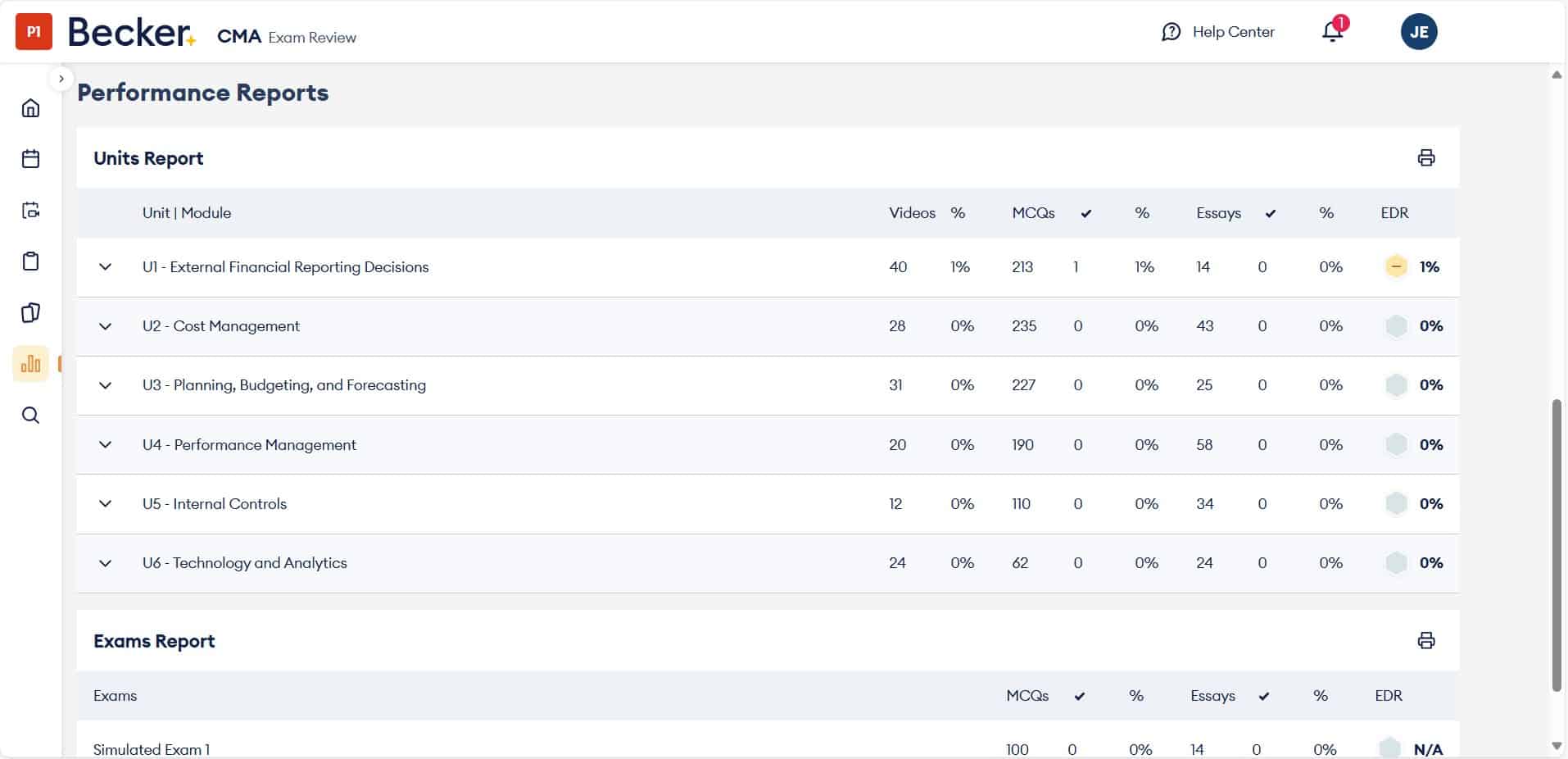
Becker’s actual content felt more concentrated. I had 4,000+ MCQs, 26 case-based questions, 155 videos, and about 27 hours of video. The lessons averaged around 10 minutes, so they weren’t overwhelming, but they still felt more like full explanations than quick check-ins. The answer explanations were also much fuller than Gleim’s. They averaged around 227 words in my sample, and I liked that they usually explained why the wrong answers were wrong. That’s where Becker felt stronger: it helped me understand the mistake, not just correct it.
Gleim had the better day-to-day rhythm. It had more content overall: 4,500+ MCQs, 75+ CBQs, around 570 videos, and 70+ video hours. On paper, that sounds heavier, but it didn’t feel that way because the lessons were broken down so well. The videos I reviewed averaged about 7 minutes, and the whole flow had this quick “watch, answer, check off, move on” feeling that made it easier to stay engaged.
The focus questions at the end of lessons were a small thing that made a real difference. There were usually only a few, so it didn’t feel like getting thrown into a long quiz right after a lecture. It was just enough to make the concept stick. I also liked that Gleim controlled the order of the bigger milestones. Final Review didn’t unlock until I’d worked through the material and the first mock exam, then the second mock came after Final Review. That structure kept me from skipping ahead in a way that probably would’ve hurt me later.
The Winner: Gleim. Becker had the better planner and deeper explanations, but Gleim’s shorter lessons, focus questions, larger essay bank, and locked progression made the actual study flow easier to keep up with.
Becker’s Polished Slides vs. Gleim’s 3-Panel Workspace
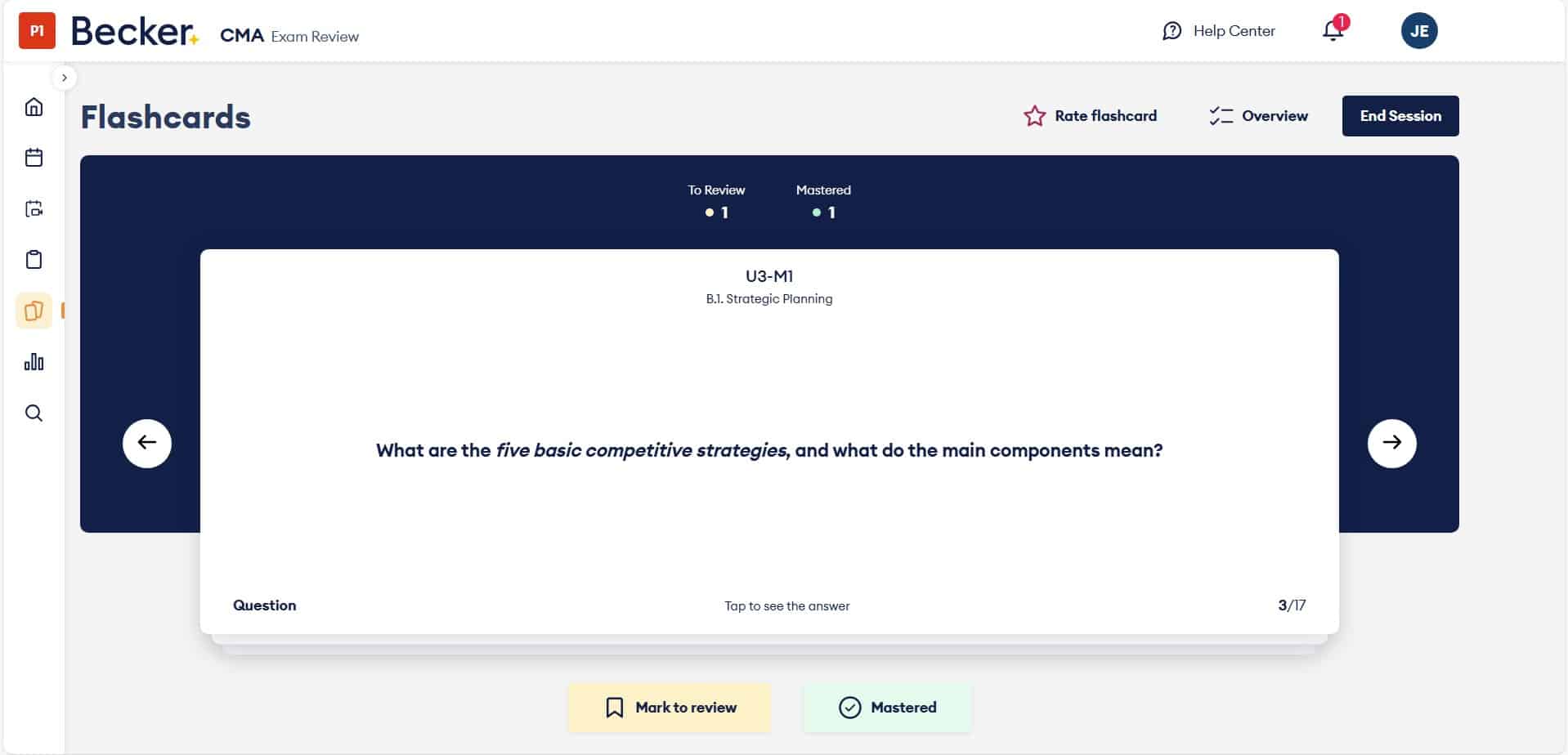
Becker looked and felt more polished. The platform had a cleaner design, and the digital textbook was easily my favorite part of the tech experience. I could color-code, underline, use squiggly lines, strikethrough text, draw directly on the page, add shapes, make boxes, and leave typed notes. It felt like a real study tool instead of a flat digital book with a couple of annotation features tacked on.
Michael Brown, CMA, CPA, was also easy to listen to. He had a calm voice, explained things clearly, and used enough inflection that the videos didn’t feel flat. The only thing that got a little funny was how much he underlined. I usually like when instructors mark up the screen, but when almost every line gets underlined, the emphasis starts to lose its punch. Still, the videos were clear, professional, and easy to follow.
Gleim’s screen layout was better for actually studying. The video sat on the left side of the screen, the outline was in the upper-right corner, and the notes box was right below it. That setup worked really well. I could watch the lesson, follow the outline, and type notes without switching tabs or rearranging anything.
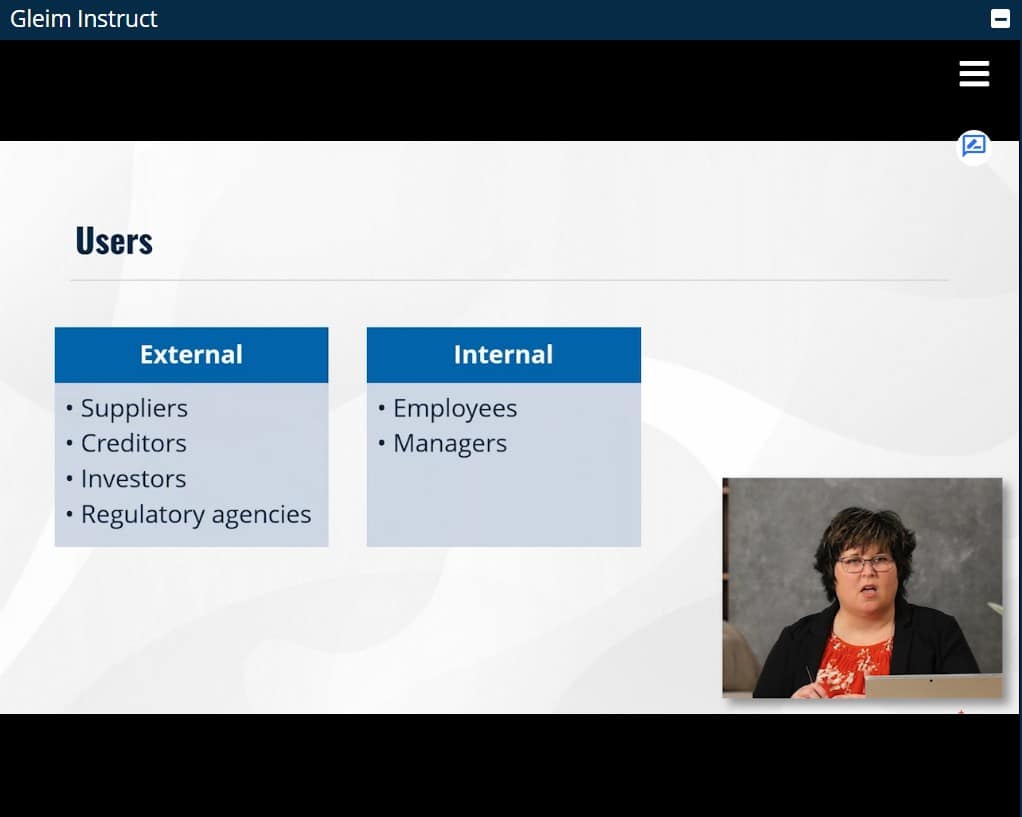
Amy Ford, CMA, CPA, fit Gleim’s format well. She had calm, friendly-professor energy: clear, steady, and confident without trying to turn the lecture into a performance. I liked when she highlighted the points most likely to matter on the exam because it made note-taking feel more targeted. Her voice had a slight accent or twang that I noticed at first, but it didn’t bother me. She came across as warm, direct, and easy to trust.
The Winner: Tie. Becker had the better-looking platform and a much better digital textbook. Gleim had the better video workspace and a smoother note-taking setup.
Where Each Course Earns Its Price
Becker gave me more help when I missed something. That’s where its value showed up most. Gleim had more practice, but Becker’s explanations were much more useful for review. Since they covered the correct answer and the incorrect choices, I could usually figure out the exact mistake I’d made. That saved time because I wasn’t left guessing whether I misunderstood the concept, misread the question, or fell for a distractor.
The planner added value, too. Becker took the course materials and turned them into daily work I could actually follow. That matters because exam prep gets messy fast when the course leaves too much planning to the student. The digital textbook also made Becker feel more complete. I could mark it up the way I wanted instead of fighting the platform.
Gleim gave me more reps. More MCQs, far more essays, more videos, and shorter lessons made it feel like a better pure practice engine. I liked that I could keep stacking small wins without setting aside a giant block of time. The course had a really good rhythm for days when my attention span was already halfway gone.
The weak spot was the explanations. My sample averaged around 66 words, and that was sometimes enough, but sometimes it felt thin. Gleim worked best when I already understood most of the concept and just needed repetition. Becker worked better when I needed the course to slow down and explain what went wrong.
The Winner: Becker. Gleim had more volume, but Becker gave me better review support through the planner, answer explanations, and digital textbook.
Tutoring + Live Classes vs. Built-In Guardrails
Becker felt stronger for structure and backup. Even without counting tutoring or live classes, the planner made the course feel more supported. I didn’t have to wake up and decide what counted as progress that day. The calendar already had the work mapped out, including timing and task type, which made the course feel easier to manage.
The higher-tier Becker package also had more traditional support: tutoring, coaching, LiveOnline classes, unlimited access, and a pass guarantee. That made Becker feel like the better option for someone who wanted accountability or expected to need help along the way. It had more built around the course, not just inside the course.
Gleim felt more independent, but still guided. Its planner wasn’t as detailed as Becker’s, but I liked that I could customize which days I studied and how many hours I had available. The unlock sequence also acted like a built-in guardrail. I couldn’t jump straight to Final Review or the second mock exam before finishing the earlier work, which kept the course moving in a sensible order.
Gleim’s support felt more system-based than personal. The course guided me through short lessons, focus questions, mock exams, and review checkpoints. That worked well for independent studying. It just didn’t have the same “extra layer” Becker had with coaching, tutoring, and live instruction.
The Winner: Becker. Gleim had good guardrails, but Becker offered more support around the course, especially with its planner, unlimited-access option, tutoring, coaching, LiveOnline classes, and pass guarantee.
See how Becker and Gleim compare to others in our best CMA review courses roundup.
Final Verdict: Becker CMA Review vs. Gleim CMA Review
Becker is the better overall CMA review course if you want polish, structure, stronger explanations, and more support. The study planner and digital textbook were the two biggest standouts for me, and the platform simply feels more premium.
Gleim is still excellent, especially if you want more practice and shorter lessons. I’d pick Gleim for students who need constant progress markers and hate long study blocks.
But if I had to choose one overall winner, I’d give Becker the slight edge because it feels more complete from planning to review.
FAQs
Becker is better overall for students who want a polished, structured course with stronger planning tools and support. Gleim is better for students who want more practice questions, more essay prep, and shorter lessons.
Gleim has more practice volume based on my course access: 4,500+ MCQs and 130+ essays compared with Becker’s 4,000+ MCQs and 26 case-based questions.
It depends on your learning style. Becker’s videos feel more polished, and Michael Brown is easy to listen to. Gleim’s videos are shorter, and I preferred the video workspace because I could see the lecture, outline, and notes at the same time.
Becker. The explanations I reviewed were longer and did a better job explaining both the correct answer and the wrong answer choices. Gleim’s explanations were more concise.
Yes. Gleim is absolutely worth considering, especially if you want more practice and a faster study rhythm. Becker feels like the better all-around course, but Gleim may be the better match for students who study best in short, focused bursts.